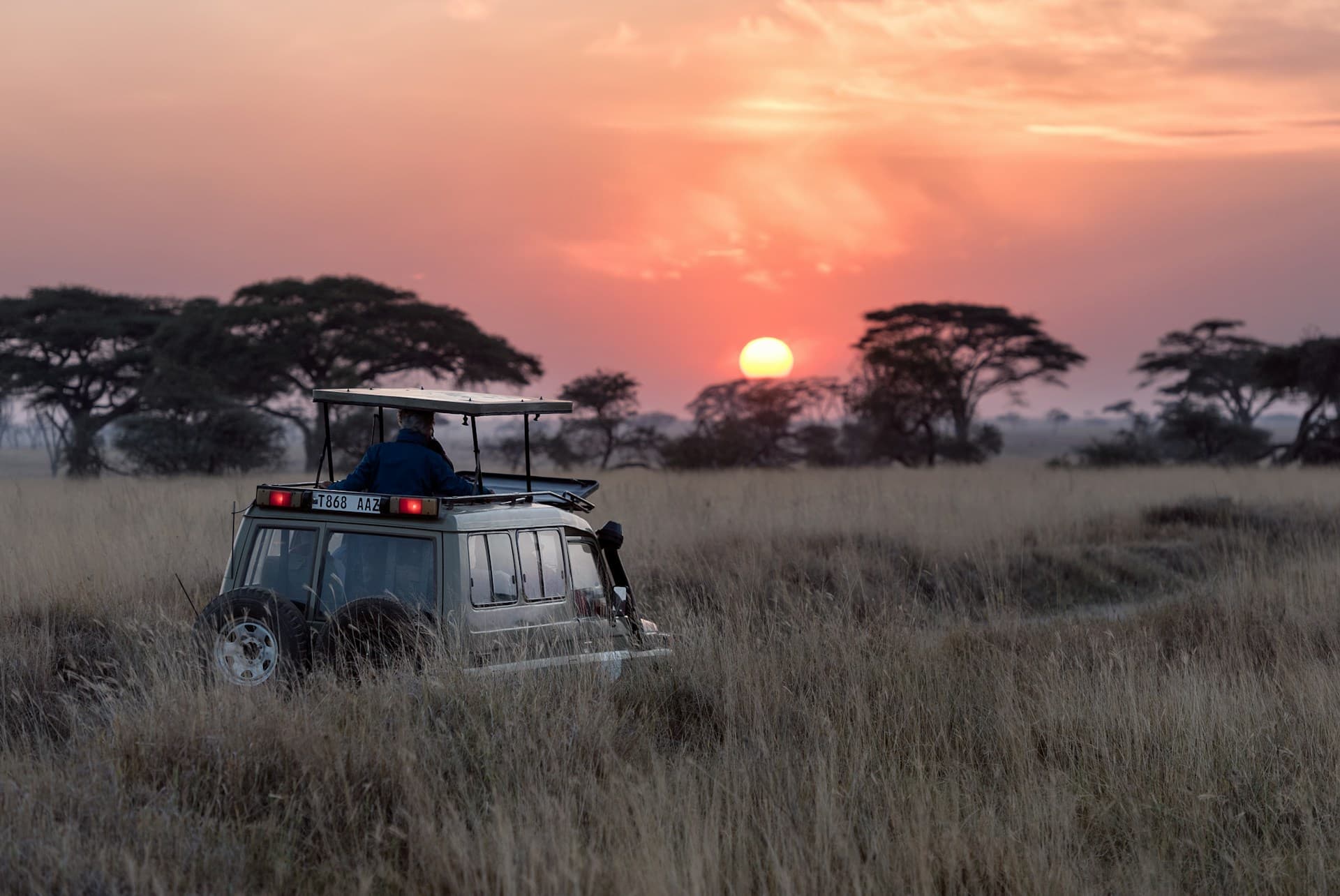

An African safari is one of those trips that fundamentally changes how you see the world. Watching a lioness stalk through golden grass at dawn, standing in the path of a million migrating wildebeest, or locking eyes with a silverback gorilla in a Rwandan rainforest — these are experiences that stay with you permanently.
But planning your first safari can feel overwhelming. Which country? What kind of safari? How much should you budget? What do you actually need to bring? This guide answers every question a first-time safari-goer has, from choosing a destination to what lens to put on your camera.
Understanding the Big Five
The "Big Five" is the term every safari brochure leads with, and it is worth understanding what it means and why it matters.
The Big Five are: lion, leopard, African elephant, Cape buffalo, and rhinoceros (both black and white rhino). The term originally came from big-game hunting — these were considered the five most dangerous animals to hunt on foot. Today, it refers to the five most sought-after animals to see on a photographic safari.
Reality Check on the Big Five
- Lions are relatively easy to see in most major parks. They sleep up to 20 hours a day, so sightings often involve lounging rather than hunting. A hunt sighting is rare and extraordinary.
- Elephants are abundant in many parks, especially in Amboseli (Kenya), Chobe (Botswana), and Kruger (South Africa). Herds of 20-50 are common.
- Cape buffalo are numerous and often overlooked by first-timers in favor of more charismatic species. They are genuinely dangerous — more people are killed by buffalo than by lions.
- Leopards are the hardest of the Big Five to spot. They are solitary, nocturnal, and masters of camouflage. Sabi Sands (South Africa) and the Masai Mara (Kenya) offer the best leopard sighting odds.
- Rhinos are critically endangered. Black rhinos are extremely rare. White rhinos are more numerous but concentrated in specific reserves. Seeing a rhino is special and not guaranteed.
Beyond the Big Five: Do not let the Big Five define your safari. Cheetahs, wild dogs (painted wolves), hippos, giraffes, zebras, hyenas, and hundreds of bird species are equally fascinating. Some of the most memorable safari moments involve animal behavior — a dung beetle rolling its prize, a lilac-breasted roller catching an insect mid-flight, or a baby elephant learning to use its trunk.
Choosing Your Safari Country
Kenya
Best for: First-time safari-goers, the Great Migration, classic savanna landscapes, combining safari with beach (Diani, Lamu)
Flagship parks: Masai Mara National Reserve, Amboseli National Park, Tsavo, Samburu, Lake Nakuru
Why Kenya:
- The Masai Mara is arguably the world's finest safari destination. Dense wildlife year-round, excellent guides, and the dramatic Mara River crossings during the migration (July-October).
- Amboseli offers elephant herds with Mount Kilimanjaro as a backdrop — one of Africa's most iconic images.
- Samburu in the north has unique species not found in southern parks: Grevy's zebra, reticulated giraffe, gerenuk, and Somali ostrich.
- Strong tourism infrastructure with options at every budget level.
- Good road network and domestic flights between parks.
Best time: July-October for the migration in the Mara. January-February for calving season in the Serengeti (combine with a cross-border trip). June-October is the general dry season.
Budget: Mid-range safari in Kenya runs USD 250-500/person/day all-inclusive. Budget camping safaris start at USD 150/day. Luxury lodges and tented camps run USD 500-1,500/day.
Tanzania
Best for: The Great Migration (year-round in different locations), Ngorongoro Crater, combining safari with Zanzibar, remote wilderness experiences
Flagship parks: Serengeti National Park, Ngorongoro Conservation Area, Tarangire, Lake Manyara, Selous/Nyerere, Ruaha
Why Tanzania:
- The Serengeti is where the Great Migration spends most of the year — the herds are in Tanzania from approximately November through July.
- Ngorongoro Crater is a collapsed volcanic caldera that acts as a natural enclosure. The density of wildlife on the crater floor is extraordinary — you can see all Big Five in a single morning.
- Selous (now Nyerere) and Ruaha in the south offer remote, uncrowded safari experiences with excellent wild dog populations.
- Zanzibar provides a perfect post-safari beach extension — Stone Town history, white sand beaches, spice tours, and excellent diving.
Best time: June-October (dry season) for general game viewing. January-March for calving season in the southern Serengeti. July-August for river crossings in the northern Serengeti.
Budget: Tanzania is generally 10-20% more expensive than Kenya at comparable quality levels. Park fees are higher (USD 70/day for the Serengeti vs USD 80 for non-residents). Mid-range all-inclusive safaris run USD 300-600/person/day.
South Africa
Best for: Self-drive safaris, budget safaris, first-time visitors who want safari + city + wine country, families, luxury lodges
Flagship parks: Kruger National Park, Sabi Sands Game Reserve, Hluhluwe-iMfolozi, Addo Elephant National Park, Kgalagadi Transfrontier Park
Why South Africa:
- Kruger National Park is the continent's most accessible major safari destination. You can self-drive (no guide required), stay in affordable rest camps (SANParks), and see all Big Five. Entry is about USD 25/day — a fraction of East African park fees.
- Sabi Sands (a private reserve bordering Kruger) offers some of the world's best luxury safari lodges and the highest concentration of leopard sightings in Africa.
- No malaria in some reserves (Eastern Cape — Addo, Shamwari, Kariega), making it ideal for families with young children.
- Combine with Cape Town — wine country, Table Mountain, penguins, and a world-class food scene make South Africa the most versatile safari destination.
- Excellent infrastructure — good roads, reliable domestic flights, modern healthcare facilities.
Best time: May-October (dry season, winter). Mornings can be cold (5-10C in Kruger in July). The bush is thinner, making wildlife easier to spot.
Budget: Self-drive Kruger starts at USD 80-120/person/day (car rental, fuel, park fees, rest camp accommodation, self-catering). Luxury Sabi Sands lodges run USD 500-2,000/person/day all-inclusive.
Botswana
Best for: Exclusive wilderness, the Okavango Delta, high-end safari, water-based safari, travelers seeking low tourist density
Flagship parks: Okavango Delta, Chobe National Park, Moremi Game Reserve, Makgadikgadi Pans, Central Kalahari
Why Botswana:
- The Okavango Delta is the world's largest inland delta — a UNESCO World Heritage Site where seasonal floodwaters from Angola create a lush oasis in the Kalahari Desert. Mokoro (dugout canoe) safaris through lily-pad channels are unique to Botswana.
- Chobe has the highest elephant concentration in Africa — up to 120,000 elephants. River cruises offer extraordinary close encounters.
- Botswana deliberately limits tourist numbers through high pricing, resulting in an uncrowded, premium experience. You will often be the only vehicle at a sighting.
- Walking safaris and night drives are permitted in private concessions, offering experiences not possible in most national parks.
Best time: May-October (dry season). The Okavango floods peak from June-August, creating the best mokoro and water safari conditions precisely when game viewing is also at its peak.
Budget: Botswana is the most expensive mainstream safari destination. Budget options are limited. Most visitors book all-inclusive fly-in camps at USD 500-2,000/person/day. Self-drive camping in Chobe is possible from USD 150-200/day.
Namibia
Best for: Landscapes, self-drive adventure, desert-adapted wildlife, photography, stargazing, travelers who want something different
Flagship parks: Etosha National Park, Namib-Naukluft (Sossusvlei), Skeleton Coast, Damaraland
Why Namibia:
- Etosha centers on a vast white salt pan, and the artificial waterholes create reliable wildlife viewing — animals come to you. Floodlit waterholes at rest camps allow extraordinary night viewing from your campsite.
- Sossusvlei and Deadvlei offer desert landscapes found nowhere else — towering red dunes and surreal white clay pans.
- Desert-adapted elephants and lions in Damaraland are unique — populations that have evolved to survive in extreme arid conditions.
- Excellent self-drive destination with good roads, well-maintained campsites, and a safe travel environment.
- Some of the darkest skies in Africa — the NamibRand Nature Reserve is an International Dark Sky Reserve.
Best time: May-October (dry season). Etosha wildlife viewing is best July-November when the pan dries and animals concentrate at waterholes.
Budget: Self-drive Namibia is excellent value: USD 100-200/person/day for car rental, fuel, campsites, and park fees. Luxury lodges run USD 400-1,200/person/day.
Rwanda
Best for: Mountain gorilla trekking, primate experiences, a compact and transformative trip
Flagship parks: Volcanoes National Park (gorillas), Nyungwe Forest (chimpanzees), Akagera National Park (Big Five)
Why Rwanda:
- Mountain gorilla trekking in Volcanoes National Park is one of the world's most powerful wildlife encounters. One hour with a gorilla family, after hiking through bamboo forest on volcanic slopes, is life-changing.
- Rwanda is small and efficient — you can do gorillas, chimpanzees, and savanna safari in 7-10 days.
- Kigali is one of Africa's cleanest and safest cities, with a powerful Genocide Memorial that provides essential historical context.
- Rwanda has invested heavily in conservation — gorilla numbers have increased, and Akagera has been restocked with lions and rhinos.
Best time: June-September and December-February (dry seasons). Gorilla trekking is year-round but drier months mean less mud.
Budget: Gorilla permits are USD 1,500 per person in Rwanda (significantly more than Uganda's USD 700). Total trip costs for a gorilla-focused visit run USD 400-800/person/day including accommodation, permits, and transport.
Safari Budget Tiers
Understanding what different price points deliver helps you set realistic expectations.
Budget (USD 150-250/person/day)
What you get:
- Shared group safari vehicle (6-8 passengers) or self-drive
- Basic campsites or budget lodges
- Simple meals (often self-catering in self-drive scenarios)
- National park rather than private reserve
Best destinations: Kruger self-drive (South Africa), group camping safaris in Kenya and Tanzania, self-drive Namibia
Pros: Affordable, authentic, adventurous
Cons: Less personalized, shared vehicles mean less control over your schedule, basic accommodation
Mid-Range (USD 250-500/person/day)
What you get:
- Private or small-group vehicle with a dedicated guide
- Comfortable lodges or tented camps with en-suite bathrooms
- All meals included (and often quite good)
- Game drives twice daily (dawn and afternoon)
Best destinations: Kenya conservancies, Tanzania camps outside the Serengeti's central zone, South African private reserves outside Sabi Sands
Pros: Good balance of quality and value, knowledgeable guides, comfortable but not extravagant
Cons: May lack the exclusivity of top-tier experiences
Luxury (USD 500-1,000+/person/day)
What you get:
- Private vehicle with an expert guide and tracker
- Premium lodges or luxury tented camps with plunge pools, fine dining, and full bar
- Walking safaris, night drives, bush meals, and other exclusive activities
- Private conservancy with limited vehicle numbers at sightings
- Often includes laundry, drinks, and transfers
Best destinations: Sabi Sands (South Africa), Okavango Delta fly-in camps (Botswana), premium Masai Mara conservancies (Kenya), Singita or andBeyond properties across Africa
Pros: Extraordinary experience, expert guiding, exclusivity, incredible food and accommodation
Cons: Expensive — but many people say their luxury safari was worth every cent
The Great Migration Explained
The Great Migration is the annual circular movement of approximately 1.5 million wildebeest, 500,000 zebra, and 300,000 gazelle through the Serengeti-Mara ecosystem. It is not a single event but a continuous cycle.
Migration Calendar
- January-March: Calving season on the southern Serengeti plains. Up to 500,000 calves born in a 2-3 week period. Predator action is intense.
- April-May: Herds begin moving northwest through the Serengeti's Western Corridor. Long grass and rain.
- June-July: Herds reach the Grumeti River. First major river crossing with crocodile encounters.
- July-October: Herds cross into Kenya's Masai Mara, encountering the Mara River. These crossings — thousands of wildebeest plunging into crocodile-infested water — are the migration's most dramatic events.
- November-December: Short rains trigger the return journey south to the Serengeti calving grounds.
Migration Viewing Tips
- Book based on where the herds will be, not just the park name. A good tour operator will know the migration patterns and position you correctly.
- River crossings are unpredictable. Herds can wait days at the riverbank before crossing. Budget at least 3-4 days in the Mara River area to maximize your chances.
- The migration is not the only reason to go. Resident wildlife in both the Serengeti and Mara is excellent year-round.
What to Pack for Safari
Packing for safari is about practicality, not fashion. Here is what experienced safari-goers recommend.
Clothing
- Neutral colors: Khaki, olive, tan, brown. Avoid white (gets dirty instantly), black and dark navy (attract tsetse flies), and bright colors (can disturb wildlife).
- Layers: Mornings on game drives are cold (often 5-15C). By midday it can be 30C+. Layers are essential.
- A warm fleece or jacket for early morning open-vehicle game drives.
- A wide-brimmed hat for sun protection.
- Long-sleeved shirts and long pants to protect against sun and insects.
- Comfortable walking shoes or boots if doing walking safaris. Sandals for around camp.
- A light rain jacket — even in dry season, surprise showers happen.
Gear
- Binoculars: Essential. Even a budget pair (8x42 magnification) transforms the experience. You will see ten times more with binoculars than without them.
- Camera: See photography section below.
- Headlamp or flashlight: Essential for moving around camp at night (camps are unlit, and wildlife wanders through).
- Sunscreen (SPF 50+) and sunglasses.
- Insect repellent containing DEET (30-50%) for malaria regions.
- Reusable water bottle.
- Power bank: Charging options in bush camps can be limited.
- Dry bag or ziplock bags for dust protection of electronics.
What NOT to Bring
- Camouflage clothing: Illegal to wear in several African countries (associated with military).
- Perfume or cologne: Attracts insects and can disturb wildlife.
- Excessive luggage: Small bush planes have strict weight limits (typically 15-20 kg including carry-on). Use a soft-sided bag, not a hard suitcase.
- Drone: Prohibited in most national parks and reserves across Africa.
Health Preparation
Malaria
Malaria is present in most major safari destinations except parts of South Africa (Eastern Cape reserves), high-altitude areas, and Namibia's coast.
Prevention options:
- Malarone (atovaquone-proguanil): Most commonly prescribed. Start 1-2 days before, take daily during exposure, continue 7 days after. Minimal side effects for most people.
- Doxycycline: Cheaper alternative. Start 1-2 days before, daily during, continue 28 days after. Can cause sun sensitivity.
- Mefloquine (Lariam): Weekly dosing but associated with vivid dreams and mood changes in some people.
In addition to medication: Use DEET-based repellent, sleep under treated mosquito nets, and wear long sleeves and pants at dusk and dawn.
Vaccinations
Consult a travel medicine clinic 6-8 weeks before departure. Common recommendations include:
- Yellow fever (required for entry to some countries, including Tanzania and Rwanda if coming from a yellow fever zone)
- Hepatitis A and B
- Typhoid
- Tetanus/diphtheria booster
- Rabies (recommended if visiting remote areas far from medical facilities)
Other Health Considerations
- Altitude: Gorilla trekking in Rwanda and Uganda occurs at 2,000-3,000 m. Some people feel altitude effects. Hydrate well and ascend gradually.
- Sun exposure: The African sun is intense, especially at altitude. Reapply sunscreen frequently.
- Water: Drink only bottled or purified water. Most lodges and camps provide safe drinking water.
- Travel insurance: Absolutely essential. Ensure your policy covers medical evacuation — some safari destinations are remote, and helicopter evacuation can cost USD 20,000+.
Safari Photography Tips
You do not need professional-grade equipment to get great safari photos, but understanding a few principles makes a major difference.
Equipment
- A camera with a decent zoom is the single most important piece of gear. A DSLR or mirrorless camera with a 100-400mm or 200-600mm lens is ideal.
- A smartphone with a good zoom can work surprisingly well for closer encounters (elephants, hippos, birds near camp).
- A beanbag to rest your lens on the vehicle door for stability (much better than handholding a heavy lens).
- Multiple memory cards and extra batteries. You will shoot thousands of images.
Techniques
- Shoot in the golden hours. The first and last hours of light produce the most beautiful images. Midday light is harsh and unflattering.
- Focus on behavior, not just portraits. A lion yawning, an elephant throwing dust, or a bird catching a fish tells a story that a static portrait cannot.
- Get eye-level. The most compelling wildlife images are shot at the animal's eye level. In a safari vehicle, this often means shooting from the window rather than standing up.
- Include the landscape. A single zebra against the vast Serengeti plain conveys the scale and mood of Africa in a way that a tight crop cannot.
- Be patient. The best shots come from waiting — for the light to shift, for the animal to look toward you, for the action to unfold. Do not rush from sighting to sighting.
Etiquette
- Never use flash — it disturbs and can temporarily blind animals.
- Keep quiet during sightings. Shouting and sudden movements scare wildlife away.
- Respect distance limits set by your guide.
- Do not pressure your guide to get closer than is safe.
How Many Days Do You Need?
- 3 days: Minimum for a worthwhile experience. You will see animals but may not see everything you hope for. Suitable for Kruger self-drive or a quick Masai Mara trip.
- 5-7 days: The sweet spot for a single park or area. Enough time to see diverse wildlife, experience different landscapes, and have those serendipitous encounters.
- 10-14 days: Ideal for combining parks or adding gorilla trekking. A classic Kenya or Tanzania itinerary might combine Amboseli + Masai Mara + a conservancy, or Serengeti + Ngorongoro + Tarangire.
- 2-3 weeks: For combining safari with beach (Zanzibar, Diani) or visiting multiple countries.
Choosing a Safari Operator
A good operator makes or breaks the experience. Here is what to look for.
- Specialization: Choose operators who focus on Africa, not generalist travel agencies.
- Guide quality: The guide is the single most important factor in your safari experience. Ask about guide training, certifications (FGASA in South Africa), and experience.
- Group size: Smaller is better. Private vehicles (2-4 people) offer the best experience. Group vehicles (6-8) are cheaper but less flexible.
- Reviews: Check TripAdvisor and SafariBookings.com for verified reviews.
- Sustainability: Good operators contribute to conservation and community development. Ask how they give back to local communities and wildlife protection.
- Responsiveness: If they are slow to respond during the booking process, service in the field may be similar.
Final Advice for First-Timers
An African safari is not a zoo visit. Animals do not perform on schedule. Some game drives will be quiet; others will deliver sightings that exceed your wildest expectations. The patience required is part of the experience — the thrill of not knowing what is around the next bend, the anticipation as your guide spots something and slows the vehicle, the silence of the bush as you watch a leopard descend from a tree in the last light.
Choose one country for your first trip, give yourself enough time (at least 5 days on safari), invest in a good guide, and approach the experience with openness rather than a checklist. Africa has a way of delivering exactly what you need, even if it is not what you expected.
Your first safari will not be your last.
Topics

Written by
TripGenie Team
The TripGenie team is passionate about making travel planning effortless with AI. We combine travel expertise with cutting-edge technology to help you explore the world.
@tripgenieGet Travel Tips Delivered Weekly
Get our best travel tips, destination guides, and exclusive deals delivered straight to your inbox every week.
No spam, ever. Unsubscribe anytime.