
Australia spans a continent, which means there is no single "best time to visit." The tropical north has a wet and dry season. The temperate south has four distinct seasons inverted from the Northern Hemisphere. The arid interior is blazing hot in summer and pleasantly warm in winter. And the Great Barrier Reef has its own microclimate entirely.
The right time to visit depends entirely on where you are going and what you want to do. This guide breaks Australia down region by region, month by month, so you can plan a trip that matches your priorities -- whether that is whale watching on the New South Wales coast, diving the Great Barrier Reef, hiking Tasmania's Overland Track, or driving through the red desert of the Outback.
Australia's Seasons at a Glance
Because Australia is in the Southern Hemisphere, its seasons are reversed from North America and Europe:
- Summer: December through February (hot)
- Autumn: March through May (cooling)
- Winter: June through August (cool to cold, depending on region)
- Spring: September through November (warming)
However, this framework only applies to the temperate south. Northern Australia (roughly above the Tropic of Capricorn) operates on a two-season model: the Dry (May through October) and the Wet (November through April).
Month-by-Month Overview
| Month | Best Regions | Weather Summary | Crowd Level | Price Level |
|---|---|---|---|---|
| January | Tasmania, Great Ocean Road | Hot in most of Australia, pleasant in Tasmania (18-24C) | High (school holidays) | Peak |
| February | Tasmania, Southern WA | Hot, summer storms in the north | High | Peak |
| March | Sydney, Melbourne, Uluru | Autumn begins, comfortable temperatures | Moderate | Shoulder |
| April | Great Barrier Reef, Red Centre | Cooling south, dry season starts in north | Moderate | Shoulder |
| May | Great Barrier Reef, Kimberley | Dry season in the north, cool in the south | Low-Moderate | Low |
| June | Tropical North, Reef | Peak dry season in the north, winter in the south | Low-Moderate | Low (except school holidays) |
| July | Tropical North, Reef, Outback | Dry season, whale season on east coast begins | Moderate (school holidays) | Moderate |
| August | Tropical North, Reef, Outback | Dry season continues, wildflower season begins in WA | Moderate | Moderate |
| September | WA wildflowers, Outback, Reef | Spring begins in the south, still dry in the north | Low-Moderate | Shoulder |
| October | Sydney, Melbourne, Uluru | Spring weather, jacaranda season in Sydney | Moderate | Shoulder |
| November | Sydney, Melbourne, Great Ocean Road | Warming up, occasional storms in the north | Moderate | Shoulder |
| December | Tasmania, Melbourne, beaches | Summer begins, school holidays start mid-month | High | Peak |
Region 1: Sydney and New South Wales
Best Time to Visit: March-May and September-November
Sydney's climate is temperate and pleasant year-round, but the shoulder seasons offer the best combination of comfortable weather, fewer crowds, and reasonable prices.
March-May (Autumn): Temperatures range from 18-25 degrees Celsius. The humidity of summer has broken, skies are typically clear, and the summer tourist crowds have dissipated. Bondi Beach is swimmable through April. This is the best time for coastal walks like the Bondi to Coogee trail and the Royal National Park Coast Track.
September-November (Spring): Temperatures climb from 17 to 24 degrees Celsius. The jacaranda trees bloom across Sydney in October and November, transforming suburbs like Kirribilli and Grafton into canopies of purple. Spring is also excellent for whale watching -- humpback whales migrate along the NSW coast from May through November, with the southern migration (September-November) bringing mothers and calves close to shore.
Summer (December-February): Hot (25-35 degrees Celsius), crowded, and expensive. Great for beach lovers, but accommodation in Sydney and coastal towns like Byron Bay can be double the off-season rate. The Sydney to Hobart yacht race starts on December 26, creating a festive atmosphere on Sydney Harbour.
Winter (June-August): Mild (8-17 degrees Celsius). Sydney is perfectly pleasant in winter -- you can still visit the harbour, explore museums, and eat at outdoor restaurants on sunny days. The Blue Mountains are crisp and beautiful. Hotel prices drop 20-30%.
Key Events
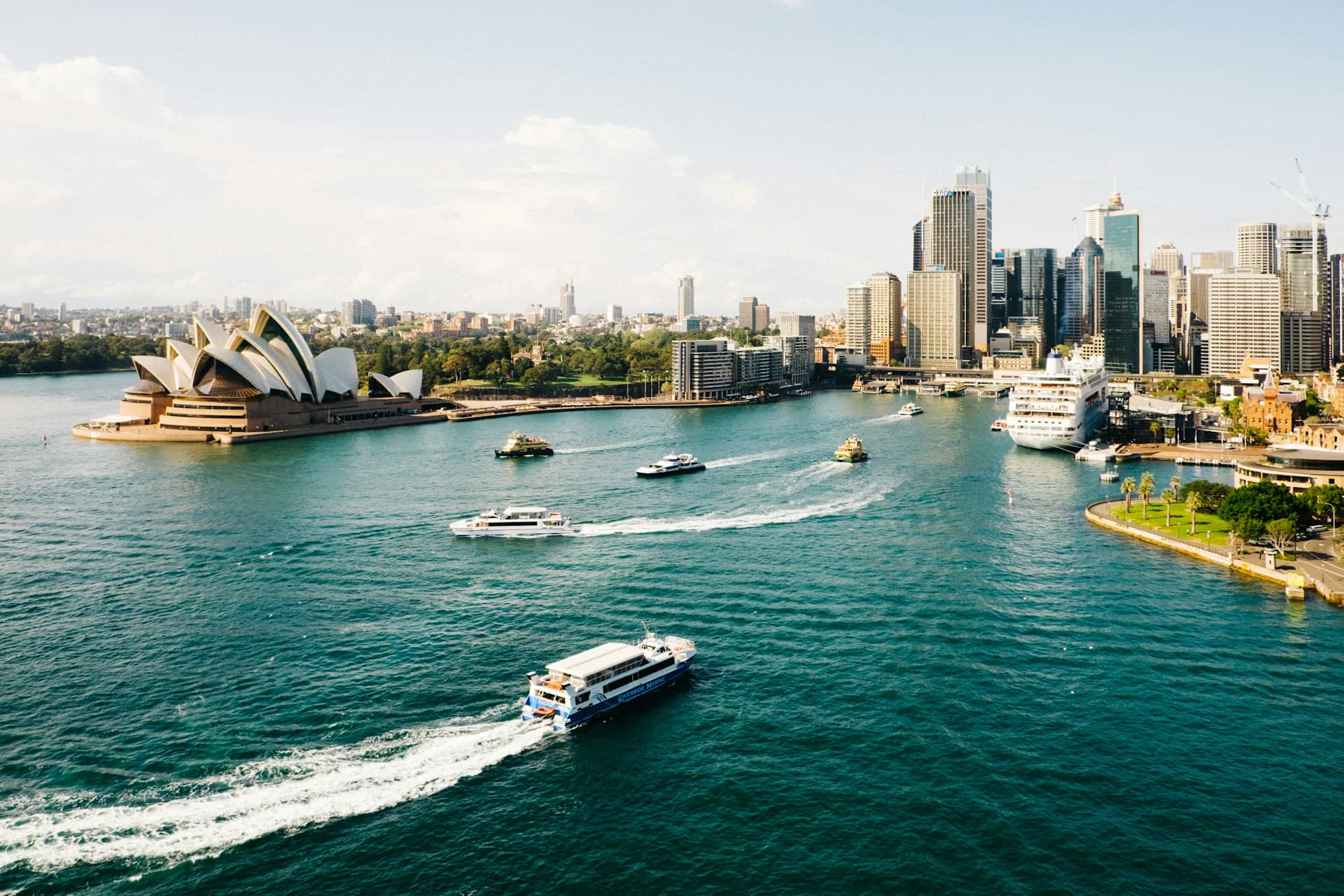
- Vivid Sydney (May-June): Massive light, music, and ideas festival transforming the Opera House and harbour
- Sydney New Year's Eve (December 31): Iconic fireworks over the harbour
- Sydney Gay and Lesbian Mardi Gras (February-March): One of the world's largest LGBTQ+ celebrations
Region 2: Melbourne and Victoria
Best Time to Visit: March-May and October-December
Melbourne has famously changeable weather -- "four seasons in one day" is a genuine local saying, not a tourist exaggeration. Layered clothing is essential regardless of when you visit.
March-May (Autumn): The most pleasant season. Temperatures of 13-22 degrees Celsius, autumn colors in parks and gardens, and the Melbourne Food and Wine Festival in March. The Great Ocean Road is spectacular in autumn with fewer tour buses than summer.
October-December (Late Spring to Early Summer): Warming temperatures (15-25 degrees Celsius), long daylight hours, and Melbourne Cup (first Tuesday in November). The Yarra Valley wine region is lush and green, and the Mornington Peninsula beaches become swimmable from late November.
Summer (January-February): Can be extremely hot (35-45 degrees Celsius during heatwaves). The Australian Open tennis tournament in January is a major draw, but accommodation is expensive. The Great Ocean Road is packed.
Winter (June-August): Cool (6-14 degrees Celsius) but manageable. This is the best time for indoor Melbourne experiences: coffee culture, laneways, galleries, and restaurants. The Phillip Island Penguin Parade runs year-round but is particularly atmospheric in winter.
Region 3: The Great Barrier Reef and Tropical North Queensland
Best Time to Visit: June-October
The Great Barrier Reef stretches over 2,300 kilometers along Queensland's northeast coast. Cairns and the Whitsunday Islands are the two main access points.
June-October (Dry Season): This is the prime season. Water temperatures are 22-26 degrees Celsius (comfortable for snorkeling without a wetsuit), underwater visibility reaches 20-30 meters, stinger (box jellyfish) risk is minimal, and rainfall is rare. August is the single best month for reef conditions.
November-May (Wet Season): The stinger season runs from November through May, requiring a full-body stinger suit for swimming. Rain is heavy and frequent, particularly January through March. However, the reef is still accessible, operators provide stinger suits, and prices drop 20-40%. Coral spawning occurs in November or December (a spectacular natural event for divers), and minke whale season runs June through July.
Specific Reef Experiences and Costs
- Day trip from Cairns to the Outer Reef: $200-$280 AUD per person (includes snorkeling, semi-submersible, lunch). Operators: Reef Magic, Sunlover Reef Cruises, Quicksilver.
- Whitsundays sailing trip (2 days/1 night): $350-$500 AUD per person. Operators: Kiana Sail, Prosail, Wings Sailing.
- Introductory dive (no certification needed): $200-$280 AUD including two dives.
Daintree Rainforest
The Daintree Rainforest, north of Cairns, is the world's oldest tropical rainforest (over 135 million years old). It is accessible year-round, but the dry season (June-October) makes river crossings easier and jungle walks more comfortable. Guided night walks ($40-$60 AUD) reveal tree kangaroos, sugar gliders, and green pythons.
Region 4: The Outback and Red Centre
Best Time to Visit: May-September
The Australian Outback encompasses the vast arid interior, with Uluru (Ayers Rock), Kata Tjuta (the Olgas), Kings Canyon, and Alice Springs as the primary destinations.
May-September (Winter/Dry Season): Daytime temperatures of 20-28 degrees Celsius are ideal for hiking and exploration. Nights can be cold (dropping to 0-5 degrees Celsius), so pack warm layers. This is the only practical time for the Larapinta Trail, a 223-kilometer hiking trail through the West MacDonnell Ranges, and the Kings Canyon Rim Walk.
October-April (Summer): Temperatures regularly exceed 40 degrees Celsius. Outdoor activities become dangerous, and some hiking trails (including the Kings Canyon Rim Walk) close when temperatures exceed 36 degrees Celsius. If you must visit in summer, plan activities for early morning (5:00-8:00 AM) and late afternoon (5:00-7:00 PM).
Uluru Practical Information
- Park entry: $38 AUD per person (valid 3 days)
- Uluru Base Walk: 10.6 kilometers around the base, 3-4 hours, free with park entry
- Field of Light (Bruce Munro art installation): $45-$160 AUD depending on tour type
- Kata Tjuta Valley of the Winds walk: 7.4 kilometers, 3-4 hours, free with park entry
- Budget accommodation: Ayers Rock Campground from $42 AUD per powered site; Outback Pioneer Hotel from $38 AUD per dorm bed
Region 5: Tasmania
Best Time to Visit: December-March
Tasmania, Australia's island state, lies south of the mainland with a temperate maritime climate. It is cooler than the mainland and significantly greener.
December-March (Summer/Early Autumn): The warmest months (12-22 degrees Celsius). This is the only practical window for Tasmania's premier multi-day hikes: the Overland Track (65 kilometers, 6 days, Cradle Mountain to Lake St. Clair) operates from October to May but conditions are best December through March. Bookings are mandatory during this period and cost $200 AUD per person.
Other summer highlights:
- Freycinet National Park and Wineglass Bay: Accessible year-round but most enjoyable in warm weather for swimming
- Bay of Fires: Pristine beaches with orange lichen-covered granite boulders
- Bruny Island: Cheese, oysters ($12-$18 AUD per dozen at Get Shucked oyster farm), and a dramatic coastline
- MONA (Museum of Old and New Art): Tasmania's world-class contemporary art museum in Hobart, open year-round ($35 AUD entry)
Winter (June-August): Cold (2-11 degrees Celsius) but atmospheric. MONA's Dark Mofo festival in June is a major draw -- a winter arts festival centered on darkness, solstice rituals, and immersive installations. Cradle Mountain is often snow-capped and spectacular. Accommodation is 30-50% cheaper than summer.
Region 6: Western Australia
Best Time to Visit: September-November (Wildflowers), March-November (Coral Coast)
Western Australia is enormous -- larger than Western Europe -- with vastly different climates across its regions.
Perth and the Southwest (September-November): Spring wildflower season is Western Australia's signature event. Over 12,000 species of wildflower carpet the landscape from the northern deserts to the southern forests. The wildflower trail runs from the Midwest region (Geraldton area) in August south to the Stirling Range in November. Perth itself is pleasant in spring (15-25 degrees Celsius) with fewer crowds than the eastern cities.
Ningaloo Reef (March-July): Ningaloo is Australia's other great reef -- a fringing reef accessible directly from shore, unlike the Great Barrier Reef which requires a boat trip. Whale shark season runs from March through July, with swimming alongside these gentle giants costing $350-$450 AUD per person. Humpback whale season follows from August through November. Manta ray encounters occur year-round.
The Kimberley (May-September): One of the world's last true wilderness frontiers. The dry season opens up the Gibb River Road (a legendary 4WD track) and reveals gorges, waterfalls, and Aboriginal rock art. Tours from Broome or Kununurra range from $2,000-$5,000 AUD for multi-day 4WD adventures.
Budget Comparison by Season
Understanding seasonal price variations can save you hundreds on accommodation and tours.
Average Nightly Accommodation Prices (Budget-Mid Range)
| Region | Peak Season | Shoulder Season | Off-Season |
|---|---|---|---|
| Sydney | $150-$250 AUD | $100-$180 AUD | $80-$140 AUD |
| Melbourne | $140-$230 AUD | $90-$160 AUD | $70-$120 AUD |
| Cairns/Reef | $120-$200 AUD | $80-$140 AUD | $60-$100 AUD |
| Tasmania | $130-$220 AUD | $80-$150 AUD | $60-$110 AUD |
| Uluru area | $140-$250 AUD | $100-$180 AUD | $80-$130 AUD |
Domestic Flight Prices
Domestic flights within Australia fluctuate significantly by season. Qantas, Jetstar, Virgin Australia, and Rex are the main carriers. Use Google Flights to track price trends.
- Peak (December-January, school holidays): Sydney to Cairns from $200-$350 AUD one-way
- Shoulder (March-May, September-November): Sydney to Cairns from $100-$200 AUD one-way
- Off-peak (June-August, excluding school holidays): Sydney to Cairns from $80-$150 AUD one-way
Pro tip: Jetstar and Virgin frequently offer sales with domestic fares from $49-$99 AUD. Follow I Know The Pilot (iknowthepilot.com.au) for Australian flight deal alerts.
Wildlife Calendar
Australia's unique wildlife is a major draw, and different animals are best seen at different times:
| Wildlife Experience | Best Time | Where |
|---|---|---|
| Whale shark swimming | March-July | Ningaloo Reef, WA |
| Humpback whale watching | June-November | Hervey Bay QLD, Byron Bay NSW, WA coast |
| Penguin parade | Year-round (best June-August) | Phillip Island, VIC |
| Platypus spotting | Year-round (best dawn/dusk) | Atherton Tablelands QLD, Cradle Mountain TAS |
| Turtle nesting | November-March | Mon Repos QLD, Ningaloo WA |
| Kangaroo encounters | Year-round (best dawn/dusk) | Everywhere, but Kangaroo Island SA is guaranteed |
| Koala sightings | Year-round | Great Otway NP VIC, Magnetic Island QLD, Raymond Island VIC |
| Cassowary sightings | Year-round (best wet season) | Daintree QLD, Mission Beach QLD |
| Crocodile cruises | May-September (dry season) | Kakadu NT, Daintree QLD, Adelaide River NT |
Planning a Multi-Region Australian Trip
Australia's size means that visiting multiple regions requires either significant driving time or domestic flights. A trip combining Sydney, the Great Barrier Reef, and Uluru involves three separate flights and three distinct climate zones. Planning around seasonal windows for each region -- reef diving in August, Uluru hiking in July, Sydney sightseeing in September -- creates the optimal experience but requires careful coordination.
TripGenie can help you map out a multi-region Australian itinerary that accounts for seasonal weather, regional events, and travel distances between destinations, ensuring you hit each region at the right time.
Practical Tips for Timing Your Visit
- Avoid school holidays if possible. Australian school holidays (mid-December to late January, two weeks in April, two weeks in July, two weeks in September/October) drive prices up across the country.
- Book the Overland Track early. The Tasmania Parks and Wildlife Service opens bookings for the October-May season on 1 July. Popular start dates sell out within hours.
- Factor in driving distances. Australia is vast. Melbourne to Sydney is an 870-kilometer drive. Cairns to the Daintree is 110 kilometers. Uluru to Alice Springs is 470 kilometers. Plan your itinerary with realistic driving times.
- Check fire season. Bushfire risk is highest from November through March in southeastern Australia. Stay informed through the Fires Near Me app (NSW), VicEmergency app (Victoria), and BOM (Bureau of Meteorology) fire weather ratings.
- Consider a campervan. Campervan rentals from Jucy, Wicked Campers, or Britz cost $40-$100 AUD per day and combine transport and accommodation. This is particularly effective for Tasmania, the Great Ocean Road, and the WA coast.
Australia rewards the traveler who plans around its seasons. Visit the reef when the water is clearest, the Outback when the heat is manageable, and the south when the weather is warmest, and you will experience one of the world's most diverse countries at its absolute best.
Topics

Written by
TripGenie Team
The TripGenie team is passionate about making travel planning effortless with AI. We combine travel expertise with cutting-edge technology to help you explore the world.
@tripgenieGet Travel Tips Delivered Weekly
Get our best travel tips, destination guides, and exclusive deals delivered straight to your inbox every week.
No spam, ever. Unsubscribe anytime.