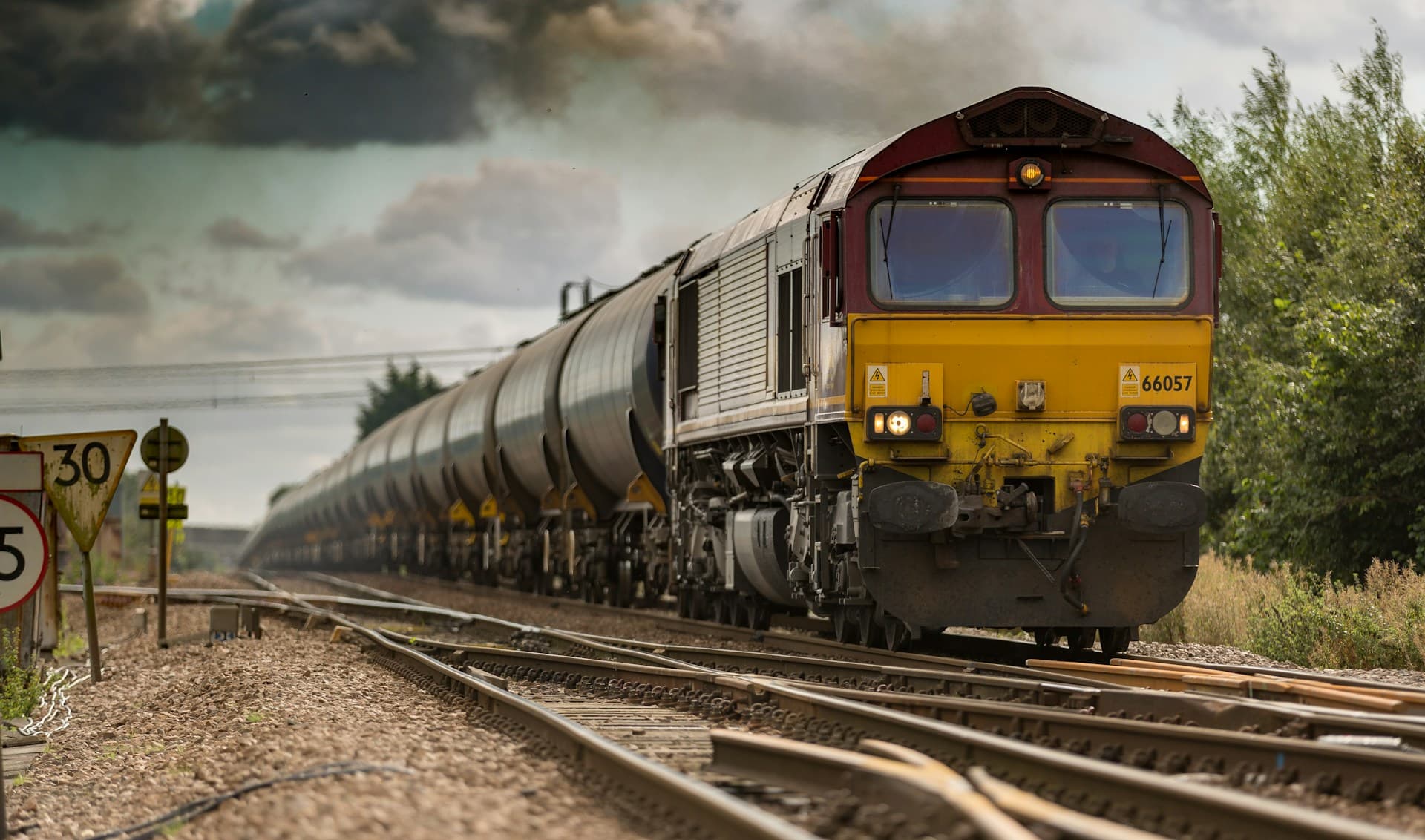

Budget Train Travel in Europe: The Complete Guide
Train travel in Europe is one of the great travel experiences. The views from a window seat as you glide through the Swiss Alps, the Rhineland vineyards, or the Adriatic coast are the kind of moments that make a trip unforgettable. But European rail travel has a reputation for being expensive, and in some cases that reputation is deserved. A last-minute Paris-to-Amsterdam ticket can cost $100+ one way. A Swiss rail journey without a pass can drain your budget fast.
The good news: with the right strategy, train travel in Europe can be remarkably affordable. Budget airlines may offer $20 fares, but when you factor in airport transfers, luggage fees, security lines, and the time burned getting to and from airports, trains often win on both cost and convenience. This guide covers everything you need to know to ride European rails without overpaying.
The Big Decision: Rail Pass vs. Point-to-Point Tickets
This is the first question every European rail traveler faces, and the answer depends entirely on your itinerary.
Eurail Global Pass (For Non-European Residents)
The Eurail Global Pass gives you access to trains in 33 European countries. It comes in several configurations:
| Pass Type | 2026 Price (2nd class) | Best For |
|---|---|---|
| 4 travel days in 1 month | $280 | Short trip, 2-3 countries |
| 5 travel days in 1 month | $310 | Medium trip, 3-4 countries |
| 7 travel days in 1 month | $380 | Extended trip with strategic travel days |
| 10 travel days in 2 months | $470 | Long trip, many destinations |
| 15 travel days in 2 months | $560 | Intensive multi-country itinerary |
| Continuous 1 month | $710 | Constant movement across Europe |
When the Global Pass saves money:
The pass pays for itself when you are making multiple long-distance journeys. Here are sample one-way ticket costs without a pass:
- Paris to Barcelona: $50-120
- Amsterdam to Berlin: $40-90
- Rome to Venice: $30-60
- Munich to Vienna: $30-70
- Berlin to Prague: $20-50
If your 7-day itinerary includes 4+ journeys averaging $60+ each, the 7-day pass ($380) breaks even or saves money. The math gets even better when you add high-speed train reservation fees into the calculation -- pass holders often get discounted reservation fees.
When the Global Pass wastes money:
If you are staying in one region (like just Italy or just the Benelux), a regional pass or individual tickets will be cheaper. If you are making only 2-3 short journeys, point-to-point tickets purchased in advance will beat the pass price.
Interrail Pass (For European Residents)
Interrail is the European-resident equivalent of Eurail. Prices are slightly lower, and the pass is available to anyone who has been a resident of a European country for at least 6 months. The structure mirrors Eurail with flexible and continuous options.
One-Country Passes
For travelers focusing on a single country, national passes often offer better value:
- Swiss Travel Pass: 3 consecutive days for $240, 4 days for $290, 8 days for $420, 15 days for $460. Essential for Switzerland, where individual tickets are astronomically expensive.
- German Rail Pass: 3 days in 1 month for $240, 5 days for $310. Competes well with advance-purchase DB tickets.
- Renfe Spain Pass: 4 journeys for $200, 8 journeys for $310. Covers AVE high-speed trains.
- ORR BritRail Pass (UK): 3 consecutive days for $180, 8 days for $310. Good value for extensive UK rail travel.
Booking Platforms: Where to Buy Cheap Tickets
National Railway Websites (Usually Cheapest)
Each country's national railway offers the best prices on their own routes, especially when booked in advance:
- SNCF Connect (sncf-connect.com): French railways. TGV advance fares from $20-40 on popular routes like Paris-Lyon, Paris-Marseille, and Paris-Bordeaux.
- Deutsche Bahn (bahn.de): German railways. Sparpreis (advance purchase) fares from $18-35 for ICE high-speed trains. The Quer-durchs-Land-Ticket ($46 for 1 person, +$9 per additional person up to 5) allows unlimited regional train travel in a single day.
- Trenitalia (trenitalia.com): Italian state railways. Advance fares from $12-30 on Frecciarossa high-speed trains. The Super Economy fare is the cheapest tier -- snag it 3-4 months ahead.
- Italo (italotreno.it): Italy's private high-speed operator. Often cheaper than Trenitalia on the same routes. Milan-Rome from $15-35 with advance booking.
- Renfe (renfe.com): Spanish railways. AVE high-speed advance fares from $20-45. The Promo fare is the cheapest category.
- SBB (sbb.ch): Swiss railways. Full-price tickets are expensive, but Supersaver tickets (advance purchase) offer 20-50% off.
- NS (ns.nl): Dutch railways. Group tickets and off-peak discounts available.
- PKP Intercity (intercity.pl): Polish railways. Some of the cheapest high-speed rail in Europe -- Warsaw to Krakow from $10-20.
- ZSSK (zssk.sk) and RegioJet (regiojet.com): Czech and Slovak railways. Prague to Vienna from $12-20.
Aggregator Platforms
These platforms search across multiple national railways and private operators:
- Trainline (trainline.com): The largest European rail aggregator. Searches SNCF, DB, Trenitalia, Renfe, and dozens of smaller operators. Adds a small booking fee but saves enormous time. The price prediction feature tells you if fares are likely to rise or fall.
- Omio (omio.com): Compares trains, buses, and flights on the same route. Useful for seeing all options side by side.
- Rail Europe (raileurope.com): Best for booking passes and multi-country journeys. Higher prices on individual tickets than national sites.
- Rome2Rio (rome2rio.com): Shows all possible transport options between two points with estimated costs. Great for route planning, though you should book through the actual provider.
Budget Rail Operators
Several private operators undercut national railways on popular routes:
- RegioJet (Czech Republic/Slovakia/Austria): Prague-Vienna from $12. Prague-Budapest from $18. Comfortable coaches with entertainment screens and free coffee.
- Leo Express (Czech Republic/Poland): Prague-Krakow from $10. Modern trains with good wifi.
- Ouigo (France/Spain): SNCF's budget TGV brand. Paris-Lyon from $10. Paris-Marseille from $16. No-frills but genuinely fast (TGV speeds).
- Avlo (Spain): Renfe's budget AVE brand. Madrid-Barcelona from $7. Madrid-Seville from $7. Launched in 2021 and expanding routes.
- Iryo (Spain): The newest Spanish high-speed operator. Madrid-Barcelona from $12-20.
Country-by-Country Train Tips
France
Book SNCF tickets 3-4 months ahead for the cheapest TGV fares (called Prem's, starting at $20). Ouigo trains depart from secondary stations (Paris-Massy instead of Gare de Lyon) -- factor in the extra transit time. The TGV Lyria service to Switzerland offers advance fares from $32 (Paris-Geneva, Paris-Zurich).
Germany
The Deutschland-Ticket (also called the 49-Euro-Ticket) costs $49/month and provides unlimited travel on all regional trains (RE, RB, S-Bahn) and local transit across Germany. This is one of the best deals in European transport. It does not cover ICE or IC high-speed trains, but regional trains reach every corner of Germany -- they just take longer.
For ICE trains, book Sparpreis fares on bahn.de 3-6 months ahead. Prices start at $18 for routes like Berlin-Munich or Hamburg-Frankfurt.
Italy
Italy has the most competitive rail market in Europe, with Trenitalia and Italo battling for passengers. This means great deals on advance tickets. Check both operators for any journey. The Trenitalia Super Economy fare and Italo Smart fare are the cheapest tiers.
For regional travel in Italy, tickets are cheap and do not require advance booking. A regional train from Florence to Siena costs about $9, no reservation needed.
Spain
Spain's rail revolution continues with three high-speed operators (Renfe, Ouigo, Iryo, and Avlo) competing on major routes. Madrid-Barcelona fares start at $7 on Avlo and $10 on Ouigo. Check all four operators. Book 2-3 months ahead for the lowest prices.
Switzerland
Switzerland is the most expensive country for rail travel in Europe. Without a Swiss Travel Pass, individual journeys are eye-wateringly costly. Example: Zurich to Interlaken costs $70 one way at full price.
Budget strategies for Swiss trains:
- The Swiss Half Fare Card ($120 for one month) gives you 50% off all trains, buses, and boats. It pays for itself in 2-3 journeys.
- Supersaver tickets on sbb.ch offer 20-50% off advance fares.
- The Swiss Travel Pass ($240 for 3 days) includes unlimited travel plus free entry to 500+ museums.
Eastern Europe
Eastern European rail is extraordinarily cheap but slower and less modern. This is where point-to-point tickets almost always beat a pass.
- Poland: Krakow to Warsaw on PKP Intercity costs $10-20. Modern Pendolino trains.
- Czech Republic: Prague to Brno from $8. Prague to Vienna from $12 on RegioJet.
- Romania: Bucharest to Brasov from $8. Trains are slow but the Carpathian scenery is spectacular.
- Hungary: Budapest to Vienna from $15. MV-START domestic tickets are cheap.
- Bulgaria: Sofia to Plovdiv from $5. Basic but functional trains.
Night Trains: Save on Hotels While You Travel
Night trains are making a major comeback in Europe, and they serve double duty for budget travelers: transportation plus accommodation in one ticket.
Top Night Train Routes
- Nightjet (OBB): Austria's national railway runs Europe's largest night train network. Popular routes:
- Vienna to Venice: from $35 (seat) / $70 (couchette) / $110 (sleeper)
- Munich to Rome: from $40 (seat) / $80 (couchette)
- Zurich to Amsterdam: from $35 (seat) / $70 (couchette)
- Vienna to Paris: from $40 (seat) / $85 (couchette)
- European Sleeper: Amsterdam to Barcelona via Brussels and Paris. Launched in 2024. Couchettes from $50.
- Caledonian Sleeper: London to the Scottish Highlands. Seats from $55, berths from $100. One of the most scenic overnight journeys in Europe.
- Intercites de Nuit: SNCF night trains on routes like Paris to Toulouse, Paris to the French Riviera. Couchettes from $20-40.
- Snalltaget: Stockholm to the Swedish ski resorts and northern Sweden. Couchettes from $30.
Night Train Tips
- Book early: Night train berths sell out weeks ahead on popular routes, especially in summer.
- Couchette vs. sleeper: Couchettes (shared compartments of 4-6 bunks, basic bedding) cost 50-60% less than private sleeper cabins. For budget travelers, couchettes are the move.
- Bring earplugs and an eye mask: Non-negotiable for sleeping on trains.
- Secure your valuables: Use the under-bunk storage or keep your bag clipped to your bunk.
- Eurail/Interrail pass holders: You still need to pay a reservation/berth supplement for night trains, typically $20-40 for a couchette.
The Best Scenic Train Routes (That Are Also Affordable)
You do not need to pay $300+ for luxury scenic trains. These routes offer world-class views at standard ticket prices:
Bergen Line, Norway
Oslo to Bergen, 7 hours, from $30 advance fare. Crosses the Hardangervidda plateau through mountain wilderness, past frozen lakes and fjord approaches. One of the most beautiful train journeys on Earth.
Bernina Express Route, Switzerland
Chur to Tirano (Italy), 4 hours. The Bernina Express tourist train costs extra, but the regular regional train on the same track costs just $25-35 with a Half Fare Card. Same views, same UNESCO-listed route, no premium price.
Belgrade to Bar, Montenegro/Serbia
11 hours, about $25. Crosses 435 bridges and passes through 254 tunnels through the Dinaric Alps. Spectacular engineering through wild Balkan scenery.
Flamsbana, Norway
Myrdal to Flam, 1 hour, $30-40. A steep descent through mountain valleys, waterfalls, and fjord landscapes. Often called the most beautiful short train journey in the world.
Cinque Terre Line, Italy
La Spezia to Levanto, 30 minutes, $4. The train hugs the Ligurian coast, passing through the five famous villages. Unlimited daily travel with the Cinque Terre Card ($16).
Douro Valley Line, Portugal
Porto to Pocinho, 3.5 hours, $15-20. Follows the Douro River through terraced vineyards and dramatic gorges. The wine country scenery is extraordinary.
How to Build a Budget European Rail Itinerary
Step 1: Choose Your Route Shape
The most efficient rail itineraries follow one of these patterns:
- Loop: Start and end in the same city (e.g., Paris - Amsterdam - Berlin - Munich - Zurich - Paris). Good for return flights from the same airport.
- Point-to-point: Start in one city, end in another (e.g., London to Rome). Requires open-jaw flights but minimizes backtracking.
- Hub and spoke: Base yourself in one city and take day trips (e.g., base in Prague, day trips to Kutna Hora, Cesky Krumlov, Dresden). Cheapest option, especially with regional passes.
Step 2: Calculate Pass vs. Tickets
For each journey, check the point-to-point advance fare on the national railway website. Add them up. If the total exceeds the cost of a rail pass plus reservation fees, get the pass. If not, buy individual tickets.
General rule of thumb: If you are making 5+ journeys averaging 3+ hours each within a 2-week period, the Eurail Global Pass usually wins. For 3 or fewer journeys, individual tickets are almost always cheaper.
Step 3: Book Advance Fares First
For any journey where you are buying individual tickets, book as early as possible. Most European railways release tickets 90-120 days in advance. The cheapest fares sell out fast. Set a reminder to book on the release date for your travel days.
Step 4: Fill Gaps with Regional Trains
Short journeys under 2 hours rarely need advance booking. Regional trains (RE, RB in Germany; Regionale in Italy; TER in France) are cheap, frequent, and flexible. Just show up and buy a ticket at the station or on the app.
Step 5: Layer in Night Trains
If your itinerary includes a long journey between distant cities (Amsterdam to Zurich, Munich to Rome, Paris to Vienna), check if a night train covers the route. You save a night of accommodation and arrive fresh in the morning.
Essential Apps and Tools
- Trainline app: Real-time departure boards, mobile tickets, and multi-operator booking.
- DB Navigator: The German railway app works across borders. Excellent for journey planning even outside Germany.
- Trenitalia and Italo apps: Mobile tickets and real-time tracking for Italian trains.
- Eurail/Interrail Rail Planner app: Essential for pass holders. Shows schedules, seat availability, and which trains require reservations.
- Seat61.com: The single best resource for European rail information. Run by a former rail industry professional, it has exhaustive guides for every route and country.
Mistakes to Avoid
- Buying tickets at the station: Walk-up fares are 2-5x the advance-purchase price on high-speed trains. Always book ahead for long-distance journeys.
- Ignoring reservation requirements: Some trains (most French TGV, Spanish AVE, Italian Frecce, all night trains) require seat reservations even with a rail pass. Book these early.
- Using only Eurail on short trips: For journeys under 1.5 hours, a rail pass travel day is wasted. Use regular tickets for short hops and save pass days for long hauls.
- Skipping validation: In Italy, regional train tickets must be validated (stamped) at the green/white machines on the platform before boarding. Failure to validate can result in a $50 fine.
- Not checking bus alternatives: On some routes, buses (FlixBus, RegioJet bus, BlaBlaBus) are 50-70% cheaper than trains with comparable travel times.
Plan Your European Rail Trip
Building a multi-country European rail itinerary that balances cost, scenic value, and logistics is one of the most satisfying forms of trip planning -- and one of the most complex. If you want help optimizing your route, TripGenie can generate rail-friendly itineraries that minimize backtracking, account for travel times, and help you decide between passes and individual tickets based on your specific journey.
The Bottom Line
European train travel does not have to be expensive. A two-week trip hitting major cities across 4-5 countries can cost under $400 in rail fares with strategic advance booking. Add a Deutschland-Ticket month for unlimited German regional trains ($49), a couple of night trains to save on hotels, and advance-purchase TGV or Italo tickets, and you have a transportation budget that rivals budget airlines -- without the luggage fees, airport hassles, or missed connections.
The views from the train window are free. And they are worth more than any money you save.
Topics

Written by
TripGenie Team
The TripGenie team is passionate about making travel planning effortless with AI. We combine travel expertise with cutting-edge technology to help you explore the world.
@tripgenieGet Travel Tips Delivered Weekly
Get our best travel tips, destination guides, and exclusive deals delivered straight to your inbox every week.
No spam, ever. Unsubscribe anytime.