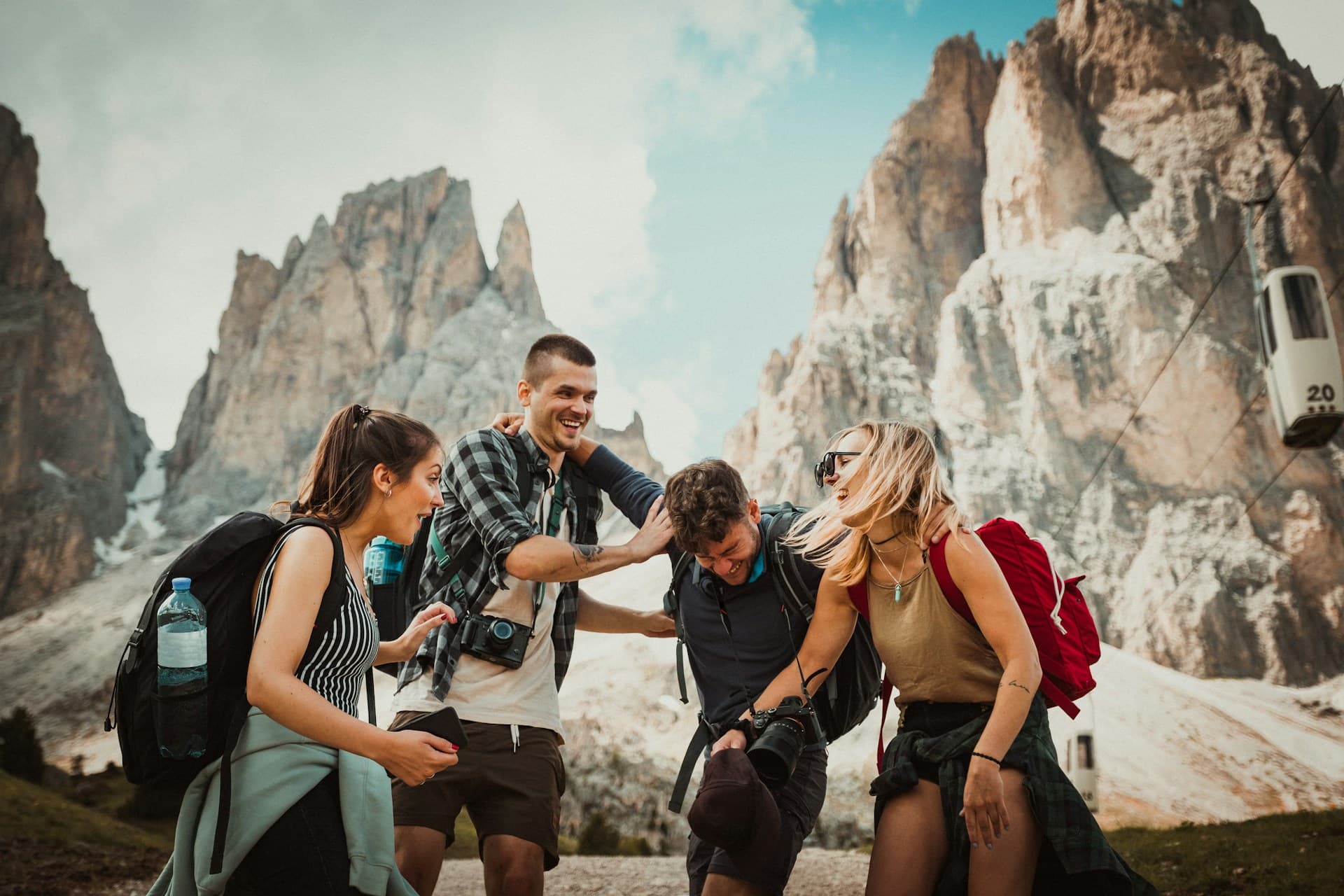

Group travel is one of those things that sounds incredible in theory. You picture sunset dinners, spontaneous adventures, and inside jokes that last a lifetime. What actually happens on poorly planned group trips? Passive-aggressive texts at 11 PM about splitting the dinner bill, one person silently fuming because they have been dragged to their third museum in a row, and friendships that need a recovery period after you get home.
I have traveled in groups ranging from 4 to 18 people across five continents. Some of those trips were among the best experiences of my life. Others nearly ended friendships. The difference always came down to avoiding a predictable set of mistakes that trip after trip, group after group, people keep making.
Here are the 10 group travel mistakes that ruin trips, and exactly how to prevent each one.
Mistake 1: Not Setting Budget Expectations Before Booking Anything
This is the single most destructive mistake in group travel. It creates resentment that poisons every other part of the trip.
The problem is not that people have different budgets. The problem is that people assume everyone shares their budget. Your friend who makes $150K thinks nothing of a $300/night hotel. Your friend who just finished graduate school is mentally calculating every purchase. Neither of them is wrong, but if nobody has an honest conversation before the first deposit is paid, you are setting a trap.
How to avoid it
Have the money conversation early and make it anonymous. Before choosing a destination, send out an anonymous survey (Google Forms works perfectly) asking everyone to share:
- Their total trip budget (flights, accommodation, food, activities, spending money)
- Their comfortable per-night accommodation range
- Their comfortable per-person dinner budget
- Whether they would prefer to spend more on accommodation or activities
Once you have the results, share the ranges without names attached. Plan for the lower-middle range of the group. The people with bigger budgets can always upgrade their own room or order the expensive wine. The people with smaller budgets should never feel like they cannot participate in the core experience.
Set up a shared expense tracker from day one. Apps like Splitwise or Tricount are non-negotiable for groups of four or more. Enter every shared expense immediately. Settling up at the end of the trip instead of tracking as you go creates arguments that no one wins.
Mistake 2: Over-Scheduling Every Day
The second most common mistake is building an itinerary that reads like a military operation. Wake up at 7. Breakfast at 7:30. Walking tour at 9. Museum at 11. Lunch at 12:30. Boat tour at 2. Shopping at 4. Dinner reservation at 7. Night market at 9.
That itinerary might work for one disciplined solo traveler. For a group of six friends? You will be behind schedule by 10 AM and frustrated by noon. Someone always needs more sleep. Someone always takes longer to get ready. Someone always wants to linger at the place you are trying to leave. With every added person, the time required for any transition doubles.
How to avoid it
Plan no more than two structured activities per day. One in the morning, one in the afternoon or evening. Leave everything else as free time or optional suggestions.
Build in buffer time everywhere. If the museum opens at 9 and you want to go, tell the group to meet in the lobby at 9:30. Assume 30 minutes of herding cats for every transition.
Create a "menu" instead of a schedule. Rather than a rigid itinerary, offer a daily list of options with time windows. "The food market is best visited between 10 AM and 1 PM. The cathedral is open until 5. The sunset viewpoint is a 20-minute walk from the hotel." Let subgroups form naturally around shared interests.
Mistake 3: Letting One Person Plan Everything
This mistake creates two victims: the planner, who spends weeks doing unpaid labor for ungrateful friends, and the group, who ends up on a trip that reflects one person's taste and tolerance for research.
The planner becomes a de facto tour guide and complaint department. When the restaurant is mediocre, it is the planner's fault. When it rains during the outdoor activity, someone makes a comment. The planner builds up quiet resentment. The group loses ownership of the experience.
How to avoid it
Divide planning into sections and assign owners. One person handles accommodation research. Another researches restaurant options. A third looks into activities and day trips. A fourth manages logistics (airport transfers, local transport). Everyone presents their findings to the group, and the group decides together.
Use a shared planning document. A simple Google Doc or Notion page where everyone can add suggestions, vote on options, and track decisions. This creates a paper trail that distributes responsibility.
The planner sets deadlines and enforces them. If someone is responsible for restaurant research, they need to present three options by a specific date. If they do not, the group picks without their input. This prevents the classic scenario where one person does all the work because nobody else follows through.
Mistake 4: Ignoring Dietary Needs and Restrictions
Nothing makes a person feel more excluded than watching their entire group eat at a place where they literally cannot consume anything on the menu. This happens constantly. The group picks a steakhouse; the vegetarian orders a side salad. The group chooses a seafood spot; the person with a shellfish allergy sits nervously. The group goes for street food; the person with celiac disease cannot risk it.
How to avoid it
Survey dietary needs before the trip, not during it. Collect allergies, intolerances, religious dietary laws, and lifestyle choices (vegetarian, vegan, halal, kosher). Write them down. Refer to the list when making restaurant choices.
When researching restaurants, check menus online. Most restaurants post menus. Spend two minutes confirming that every member of the group can eat at least one or two dishes at each spot.
In destinations where dietary needs are harder to meet, plan ahead. If you are traveling to a place where vegetarian options are scarce (looking at you, Argentina), research restaurants with options in advance rather than hoping you will stumble on something.
Never make someone feel like a burden for their dietary needs. The fastest way to ruin a trip dynamic is to sigh audibly when someone mentions their allergy. These are non-negotiable health or ethical commitments, not personal attacks on your dinner plans.
Mistake 5: Not Discussing the Alcohol Budget
Alcohol is the silent budget destroyer of group trips. A single round of cocktails for eight people in a European capital can cost $120. Three rounds and a bottle of wine at dinner, and you have spent $400 before anyone noticed.
The problem is not the drinking itself. The problem is that alcohol spending is wildly uneven in most groups. One person drinks craft cocktails. Another drinks beer. A third does not drink at all. Splitting the bill equally means the non-drinker is subsidizing everyone else's bar tab, and they will notice.
How to avoid it
Separate alcohol from food when splitting bills. Most restaurants can split a check or at minimum tell you the drink total. The people who drank cover the drinks. The food splits evenly (or close to it).
Set a group kitty for communal drinking. If you are buying wine for the rental house or beers for the beach, everyone who drinks puts a set amount into a communal fund at the start of the trip. Non-drinkers are exempt.
Be direct about this early. "Hey, just so we are on the same page, should we split drinks separately from food?" This one sentence, spoken before the first dinner, prevents a week of quiet frustration.
Mistake 6: Not Building in Alone Time
Even the most extroverted person in your group needs time to recharge. When you are sharing a rental house or connecting rooms for a week straight, the constant togetherness becomes exhausting. Small habits that are invisible for a few hours become maddening after five days. The way someone chews. The volume of someone's voice. The person who is always ten minutes late.
Without alone time, these small irritations compound until someone snaps over something trivial, and everyone pretends it is about the trivial thing instead of acknowledging that they have spent 120 consecutive waking hours together.
How to avoid it
Normalize "me time" before the trip starts. During planning, explicitly say: "We should each take at least one afternoon or morning to ourselves. No hard feelings, no FOMO." This gives everyone permission to step away without guilt.
Build free blocks into the schedule. After a busy morning, declare the afternoon as free time. People can nap, read, wander alone, journal, or call home. Reconvene for dinner.
Choose accommodation with private space. If budget allows, individual rooms (even small ones) are dramatically better for group harmony than shared rooms. If you must share, choose places with common areas where people can spread out.
Mistake 7: Booking Non-Refundable Everything When Your Group Includes Flaky People
You know who I am talking about. Every friend group has at least one person who says "I am definitely in!" and then drops out three weeks before departure. If you have booked non-refundable flights, a non-refundable villa that requires their share, and prepaid activities, their flakiness becomes everyone's financial problem.
How to avoid it
Collect deposits early. Before booking anything, collect a meaningful deposit from every confirmed attendee. $200-500 depending on the trip cost. Make it clear and in writing: "This deposit is non-refundable after [date] because that is when we lock in bookings." If someone will not put down a deposit, they are not actually committed.
Book refundable or flexible options for the first 30 days. Most hotels offer free cancellation until 24-48 hours before arrival. Book the flexible rate initially, then switch to non-refundable rates once the group is truly locked in.
Build a backup list. If your ideal group size is eight, identify two people who would love to come if a spot opens up. This is not rude; it is practical. Everyone knows how group trips work.
Be explicit about financial responsibility. "If you drop out after we book, you are responsible for your share of non-refundable costs." Put this in writing. It sounds harsh in advance, but it prevents much harsher conversations later.
Mistake 8: Not Establishing Daily Meetup Points and Communication Plans
In the age of smartphones, people assume they can always reach each other. Then they arrive in a foreign country where cell service is spotty, data roaming is expensive, and the rental house Wi-Fi does not extend to the pool. Someone wanders off to explore, their phone dies, and suddenly the group spends 90 minutes looking for them instead of eating dinner.
How to avoid it
Establish a daily meetup time and place. Even if everyone has working phones, set a fallback: "If we get separated, we meet at the accommodation lobby at 6 PM." This eliminates the anxiety spiral that happens when someone goes off-grid for a few hours.
Create a WhatsApp or iMessage group before departure. Add everyone. Use it as the primary communication channel. Pin important information: the accommodation address, the host's phone number, the emergency contact, daily plans.
Share live locations when exploring separately. WhatsApp, Google Maps, and Apple Maps all have location-sharing features. When the group splits up in an unfamiliar city, turning on location sharing for a few hours provides peace of mind without requiring constant check-in texts.
Agree on an emergency plan. What happens if someone loses their passport? Gets sick? Has their phone stolen? Knowing who has photocopies of documents, where the nearest embassy is, and what the local emergency number is should be discussed once before you need it.
Mistake 9: Phone Addiction Ruining Shared Experiences
This is the modern plague of group travel. You are standing in front of the Colosseum and three people in your group are scrolling Instagram. You are at a once-in-a-lifetime dinner and someone is texting their office. You are watching a sunset and someone is filming it in vertical video while narrating for their TikTok.
A certain amount of phone use is unavoidable and fine. Maps, translations, restaurant lookups, quick photos. The problem is when phone use replaces being present. It sends a signal to everyone else: "This experience is not enough for me. I need to be somewhere else."
How to avoid it
Propose phone-free windows, not a phone-free trip. Nobody will agree to a total phone ban. But most people will agree to "phones away during meals" or "no phones for the first hour at each new place."
Lead by example. Put your phone in your bag. Look around. Make a comment about what you see. Ask someone a question. Presence is contagious. When one person puts their phone away, others often follow.
Designate a photographer. Instead of everyone shooting the same scene from slightly different angles, rotate who is the "trip photographer" each day. That person captures the moments. Everyone else is present in them. Share all photos in a shared album at the end of each day.
Mistake 10: Not Documenting Memories Together
This might seem like a minor issue compared to budget fights and schedule conflicts, but it is the mistake people regret most in the long run. Six months after the trip, the memories are already fading. The joke that had everyone crying with laughter? You cannot quite remember the setup. The tiny restaurant you stumbled into? You did not save the name. The moment everyone agrees was the highlight? Nobody got a photo.
How to avoid it
Create a shared Google Photos or iCloud album. Do it before the trip. Have everyone upload their photos daily. This single action means everyone goes home with the complete visual record of the trip, not just their own perspective.
Take a group photo every day. It sounds cheesy. Do it anyway. Assign one person to remember. In five years, those daily group photos will be among your most treasured possessions.
Keep a trip journal. This can be a physical notebook that gets passed around at dinner, or a shared Google Doc, or a daily voice memo. Record the highlights, the jokes, the quotes, the surprises. Memory is unreliable. Written records are not.
Do a "highlights round" on the last night. At your final dinner, go around the table and have everyone share their favorite moment from the trip. It is a simple ritual that creates a sense of closure and ensures the trip ends on a high note rather than the stress of packing and departure logistics.
The Meta-Lesson: Communication Is Everything
If you look at all 10 mistakes, they share a common thread: a failure to communicate expectations before they become conflicts. Budget, schedules, responsibilities, dietary needs, alcohol, alone time, reliability, logistics, phone use, documentation. Every single one of these becomes a non-issue when you talk about it in advance.
The best group trips I have been on started with a single planning call where someone said: "Let us talk about what we actually want from this trip and how we are going to handle the practical stuff." That 30-minute conversation saved days of friction.
The worst group trips I have been on started with: "Let us just go with the flow!" Going with the flow works for two easy-going friends. For six or more people with different budgets, energy levels, interests, and communication styles, "going with the flow" means "whoever is most assertive makes all the decisions and everyone else quietly resents it."
A Pre-Trip Checklist for Group Travel
Before you book a single thing, make sure your group has discussed:
- Budget range for the total trip, per-night accommodation, and daily spending
- Must-do activities for each person (everyone gets at least one)
- Deal-breakers (things someone absolutely cannot or will not do)
- Dietary needs and restrictions
- How bills will be split (and which app you will use to track)
- Daily rhythm preferences (early birds vs. night owls)
- Alone time expectations
- Cancellation policy (who pays if someone drops out)
- Communication plan (which app, emergency contacts, meetup protocol)
- Photo sharing plan (shared album, daily uploads)
Cover these ten topics in one planning call, and you have just eliminated 90% of the friction that ruins group trips. The remaining 10% is weather, delayed flights, and the universal truth that someone will always take too long in the bathroom. Some things are beyond even the best planning.
Travel with intention. Communicate with honesty. And remember that the whole point of a group trip is to enjoy each other's company. Everything else is logistics.
Topics

Written by
TripGenie Team
The TripGenie team is passionate about making travel planning effortless with AI. We combine travel expertise with cutting-edge technology to help you explore the world.
@tripgenieGet Travel Tips Delivered Weekly
Get our best travel tips, destination guides, and exclusive deals delivered straight to your inbox every week.
No spam, ever. Unsubscribe anytime.