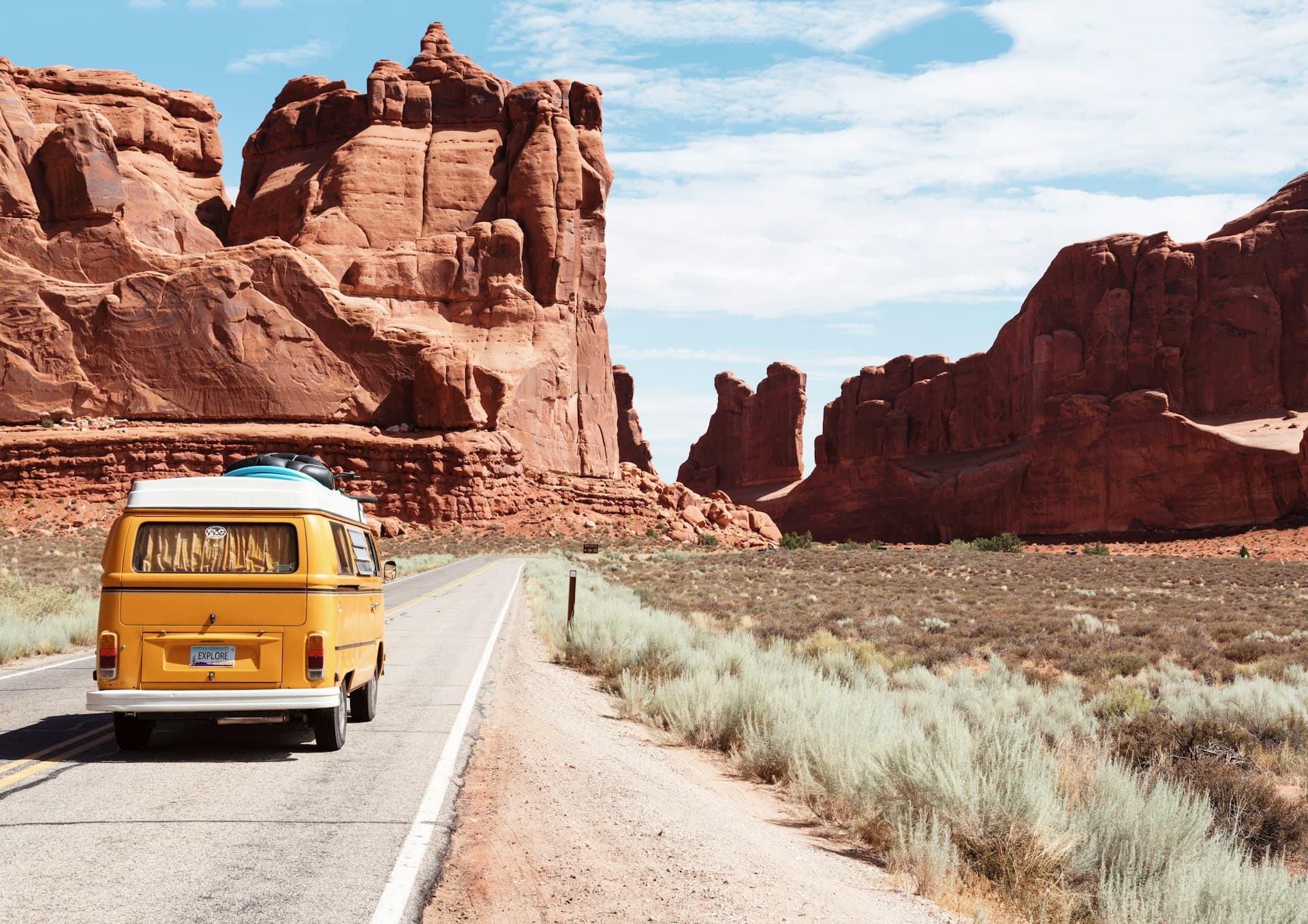

A road trip is the most free-form way to travel. No flight schedules, no check-in times, no seat assignments. Just a car, a direction, and the freedom to stop anywhere that catches your eye. A roadside diner with neon signs, a viewpoint that wasn't in any guidebook, a small town that ends up being the highlight of the trip.
But that freedom comes with a planning responsibility. A great road trip feels spontaneous; it isn't. The best ones are built on a solid framework of route planning, realistic daily driving targets, and preparation that prevents breakdowns — mechanical and emotional — from derailing the experience.
This guide covers the full planning process, from mapping your route to packing the car.
Route Planning: Tools and Strategy
The Best Route Planning Tools
Google Maps is the obvious starting point. It handles basic routing, real-time traffic, and gas station locations well. But it's designed for getting from A to B efficiently, not for building a scenic road trip with multiple stops.
For road trip-specific planning, use dedicated tools:
- Roadtrippers: The gold standard for road trip planning. Enter your start and end points, and the app surfaces attractions, restaurants, scenic stops, campgrounds, and hotels along your route. You can add stops with a click and see how each addition affects your total drive time. Free for up to 5 waypoints, premium for unlimited
- Furkot: A detailed trip planner that lets you set daily driving limits, add overnight stops, and build a day-by-day itinerary with drive times and stop durations. Excellent for multi-day trips
- Google My Maps: Create a custom map with pins for every stop, color-coded by category (restaurants, viewpoints, accommodations). Share it with your travel companions so everyone can add suggestions
Route Strategy
The fastest route is rarely the best road trip. Highway driving is efficient but monotonous. The parallel secondary roads — state routes, county roads, scenic byways — are where the road trip actually happens.
Build your route in layers:
- Start with the skeleton: Your origin, destination, and any must-see stops between them
- Choose your primary roads: Highways for long transit sections, scenic byways for the experiential sections
- Add detour-worthy stops: Attractions, viewpoints, and towns that are within 30 minutes of your route
- Mark food and fuel stops: Especially in rural areas where gas stations can be 50+ miles apart
- Build in buffer time: Add 20-30% to Google's estimated driving time for stops, photos, slow traffic, and getting lost
How to Avoid Planning Too Much
The paradox of road trip planning is that over-planning kills the spontaneity that makes road trips special. The fix: plan your overnight stops and must-see attractions in advance, but leave the daytime schedule loose.
Know where you're sleeping each night. Know the one or two things you absolutely can't miss each day. Leave the rest to the road.
Daily Driving Limits: How Far Is Too Far?
This is where most first-time road trippers make their biggest mistake. They look at an 8-hour drive on Google Maps and think, "That's doable in a day." It is — if you want to arrive exhausted, irritable, and having seen nothing but asphalt.
Realistic Daily Driving Guidelines
- 3-4 hours of actual driving is the sweet spot for a leisurely road trip with frequent stops, exploration, and enjoyment
- 5-6 hours is a full road trip day — manageable but tiring, especially with passengers who get restless
- 7-8 hours is a transit day, not a road trip day. Use these sparingly to cover long distances between your "good" sections
- Never exceed 8 hours unless you have multiple drivers and are genuinely just trying to relocate
Rest Stops and Driver Fatigue
- Stop every 2 hours for at least 15 minutes. Get out of the car, stretch, walk around
- Switch drivers every 2-3 hours if traveling with others
- Watch for fatigue signs: Yawning, wandering attention, drifting in your lane, missing exits. Pull over immediately if you notice these
- Avoid driving after dark in unfamiliar rural areas. Wildlife, unmarked roads, and limited visibility make nighttime driving on back roads genuinely dangerous
Fuel Budgeting
Gas costs are predictable if you plan ahead, and surprising if you don't.
Calculating Fuel Costs
- Estimate total miles: Google Maps gives this directly. Add 15-20% for detours and side trips
- Determine your vehicle's fuel economy: Check the EPA rating or use real-world averages from fuelly.com. A typical sedan gets 28-35 MPG, an SUV 20-28 MPG, a truck 15-22 MPG
- Divide total miles by MPG to get gallons needed
- Multiply by the average gas price for your route (GasBuddy app shows current prices by location)
Example: A 2,000-mile trip in an SUV averaging 24 MPG at $3.50/gallon costs roughly 83 gallons x $3.50 = $292 in fuel.
Saving on Gas
- Use GasBuddy or Google Maps to find the cheapest stations along your route. Prices can vary by $0.50/gallon between stations a few miles apart
- Fill up in rural areas before they get remote — prices spike at the only station for 60 miles
- Costco and warehouse club stations offer significantly lower prices if you have a membership and one is on your route
- Maintain steady highway speeds: 65 MPH is typically 15-20% more fuel-efficient than 80 MPH
- Check tire pressure before departure. Under-inflated tires reduce fuel economy by up to 3%
Accommodation Along the Route
Camping
The cheapest option and often the most memorable. A campsite at a national park, state park, or national forest campground costs $10-35/night.
- Reserve in advance for popular national parks (Yellowstone, Yosemite, Zion). Sites fill up months ahead during peak season
- National forest dispersed camping is often free and available without reservation in most western US forests
- Apps like iOverlander and The Dyrt help you find campsites along your route
- What you need: Tent, sleeping bag, sleeping pad, headlamp, camp stove or cooking setup, and a tolerance for outdoor bathrooms
Motels and Budget Hotels
The classic road trip accommodation. Expect $60-120/night for chains like Motel 6, Super 8, or La Quinta.
- Book ahead during peak season and for popular highway corridors. Walk-in availability is unreliable during summer
- Check reviews on Google Maps rather than the hotel's own site — you want recent, unfiltered feedback
- AAA and AARP discounts often apply and can save 10-15%
- Loyalty programs like Wyndham Rewards or Choice Privileges offer free nights after a few stays
Airbnb and Vacation Rentals
Better value for groups and families, especially when you want a kitchen to cook meals (saving significantly on food costs).
- Book at least a week ahead for the best selection, especially in small towns with limited inventory
- Look for properties with self-check-in (lockbox or smart lock) so you're not coordinating arrival times with a host after a long driving day
- Entire homes work best for road trips — you'll want space to spread out and unpack, not just a bedroom in someone's house
Staying Flexible
Book your first and last nights firmly. For nights in between, consider booking refundable options or waiting to see how the trip unfolds. Some of the best road trip memories come from deciding to stay an extra night in a town you didn't plan on loving.
Car Rental Tips
If you're not using your own car, renting one for a road trip requires specific considerations.
Choosing the Right Vehicle
- Sedan: Best fuel economy, cheapest to rent. Fine for highway trips and well-maintained roads
- SUV or crossover: More space for luggage and passengers, better ground clearance for unpaved roads. Worth the premium if you're going off the main highways
- Minivan: The best value for groups of 5-7. More cargo space than an SUV, cheaper to rent, and surprisingly comfortable for long drives
Rental Tips
- Book early and check back frequently: Rental prices fluctuate. Book a refundable reservation now, then check back periodically for lower rates and rebook if prices drop
- Check one-way drop-off fees: If your road trip ends in a different city than where it starts, one-way fees can range from $50 to $500+. Sometimes it's cheaper to drive back
- Avoid airport surcharges: Renting from a city location instead of the airport can save 20-30% in taxes and fees
- Decline the rental company's insurance if your personal auto insurance or credit card covers rental cars. Call your insurer to confirm before the trip
- Photograph the car thoroughly before driving off the lot. Document any existing damage. Do the same when you return it
- Fill up the tank before returning — the rental company's refueling charge is typically 2-3x the local gas price
International Driving
If you're road-tripping abroad, you may need an International Driving Permit (IDP). This translates your license into multiple languages and is required in many countries.
- Available from AAA in the US for $20
- Must be carried alongside your valid domestic license
- Some countries (UK, most of the EU) accept US licenses without an IDP for short stays, but car rental companies often require one regardless
- Drive on the left in the UK, Japan, Australia, Thailand, and several other countries. Practice in a parking lot before hitting the road
Essential Road Trip Car Kit
Pack these items in an accessible spot, not buried under luggage:
Safety
- First aid kit with basics: bandaids, antiseptic, gauze, pain relievers, antihistamines
- Flashlight with extra batteries (or a crank-powered one)
- Reflective emergency triangles or flares
- Phone charger and car charger cable — ideally two, so passengers can charge simultaneously
- Paper map or road atlas as a backup for when you lose cell signal
Comfort
- Blanket and pillow for passengers (and emergency overnight situations)
- Reusable water bottles and a small cooler for drinks and snacks
- Sunglasses and a sunshade for the windshield during parked stops
- Plastic bags for trash and wet/dirty items
- Paper towels and wet wipes for spills and quick cleanups
Vehicle
- Spare tire, jack, and lug wrench (verify these are in the vehicle before departure, especially rentals)
- Jumper cables or a portable jump starter
- Tire pressure gauge
- Windshield washer fluid (a gallon in the trunk)
- Basic tool kit: screwdriver, pliers, duct tape, zip ties
Entertainment for the Road
Audio
- Download podcasts and audiobooks before departure — cell signal on rural highways is unreliable for streaming
- Create a collaborative playlist: Use Spotify or Apple Music's shared playlist feature so everyone contributes songs before the trip
- The road trip game playlist: Songs about driving, travel, and the open road. Every great road trip has a soundtrack moment — windows down, volume up, perfect song, perfect view
Activities for Passengers
- Road trip games: 20 Questions, the License Plate Game, storytelling games where each person adds a sentence
- Bring a physical book or magazine — screen fatigue is real after hours of phone use
- A travel journal or sketchbook for documenting the trip in real time
- Download Netflix/streaming content to devices for passengers during long transit sections
Scenic Route Suggestions
American West
- Pacific Coast Highway (California): San Francisco to Los Angeles via Highway 1. 380 miles, 2-3 days minimum. Dramatic cliffs, Big Sur, beach towns, and Hearst Castle
- Utah's Mighty Five: A loop connecting Zion, Bryce Canyon, Capitol Reef, Arches, and Canyonlands. 800 miles, 7-10 days. Some of the most dramatic landscapes on Earth
- Going-to-the-Sun Road (Montana): 50 miles through Glacier National Park. Open June-October. Arguably the most scenic mountain road in North America
Europe
- Iceland's Ring Road: 828 miles circling the entire island. 10-14 days. Waterfalls, glaciers, volcanoes, hot springs, and some of the most dramatic terrain anywhere
- Amalfi Coast (Italy): 40 miles of switchbacks along cliff-side roads above the Mediterranean. Stunning but intense driving. 1-2 days, with stops in Positano, Amalfi, and Ravello
- Scottish Highlands (NC500): 516 miles through the north of Scotland. 5-7 days. Castles, lochs, distilleries, and wild, empty landscapes
Oceania
- Great Ocean Road (Australia): 150 miles along Victoria's coast. 2-3 days. The Twelve Apostles, rainforest, surf towns, and koala spotting
- New Zealand's South Island: Queenstown to Milford Sound and back, or the full West Coast drive. 5-10 days of mountains, fjords, and jaw-dropping scenery
Planning Your Route with AI
If the logistics of route planning feel overwhelming — especially the balancing act between driving time, stops, and accommodation — TripGenie can build a day-by-day road trip itinerary based on your route, interests, and pace preference. Describe your start point, end point, and what you want to see, and the AI handles the routing, scheduling, and overnight stop recommendations.
The best road trips feel effortless. That effortlessness comes from preparation. Plan the framework, pack the car, curate the playlist, and then do the one thing a road trip demands above all else: let the road surprise you.
Topics

Written by
TripGenie Team
The TripGenie team is passionate about making travel planning effortless with AI. We combine travel expertise with cutting-edge technology to help you explore the world.
@tripgenieGet Travel Tips Delivered Weekly
Get our best travel tips, destination guides, and exclusive deals delivered straight to your inbox every week.
No spam, ever. Unsubscribe anytime.